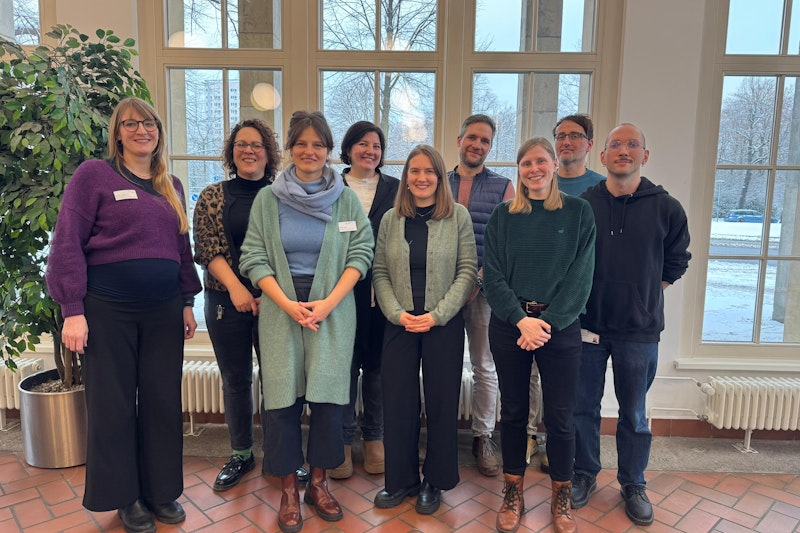
StaR_MHI is a three-part collaborative project within the expert network of the German Center for Mental Health (DZPG), the University Hospital Halle, the Leibniz Institute of Resilience Research (LIR), the German Youth Institute (DJI), the LMU University Hospital München, the Charité University Hospital Berlin, the University Hospital Jena, the Central Institute of Mental Health Mannheim, the Leibniz Research Centre for Working Environment and Human Factors (IfADo), the Institute of Psychology and the Student Health Management of the Martin-Luther-University Halle-Wittenberg that aims to identify predictors of students’ mental health, validate them through high-frequency longitudinal analyses, and adapt and further develop suitable interdisciplinary intervention platforms for support and guidance.
“The data collected as part of the projects and the measures based on it are intended to benefit students, school pupils and trainees. The initiative aims to improve mental health in the long term by identifying risk factors and promoting resilience through appropriate measures. In this way, the aim is to reduce the number of people dropping out of training and to better prepare young people for an increasingly complex world of work.”
Prof. Dr. Stefan Watzke
Consortium lead StaR_MHI
StaR_MHI
Project description
Students at Risk for Mental Health Issues (StaR_MHI) is a collaborative research project within the expert network of the German Center for Mental Health (DZPG), the University Hospital Halle, the Leibniz Institute of Resilience Research (LIR), the German Youth Institute (DJI), the LMU University Hospital München, the Charité University Hospital Berlin, the University Hospital Jena, the Central Institute of Mental Health Mannheim, the Leibniz Research Centre for Working Environment and Human Factors (IfADo), the Institute of Psychology and the Student Health Management of the Martin-Luther-University Halle-Wittenberg. The project is conducted across nine sites with overall coordination based at the Department of Psychiatry, Psychotherapy and Psychosomatics at the University Hospital in Halle. The working packages are carried out in close collaboration with student representatives and the Trialogical Center Council of the DZPG, which includes individuals with lived experience, relatives, and researchers from all DZPG sites. StaR_MHI aims to identify predictors of students’ mental health, validate them longitudinally with high-frequency data, and further develop intervention platforms for interdisciplinary support.
Work Package 1 comprises the critical systematization and synthesis of existing research findings on risk and resilience factors related to students’ mental health, complemented by the analysis of insurance and time-series data.
Work Package 2 involves the assessment of identified predictors in a baseline survey to forecast psychopathological trajectories. These data are further enriched with (neuro-)biological profiles, information on mental health literacy, and data from student surveys.
In work Package 3, findings are translated into practice in cooperation with the Trialogical Center Council of the DZPG, experts by experience, and student representatives. The results will be discussed and synthesized, along with recommendations derived from them in order to adapt existing interventions to improve students’ mental health.
In the long term, StaR_MHI aims to make a sustainable contribution to an inclusive, risk-aware, and resilience-oriented education in Germany, as well as to the recovery of affected students. In doing so, it supports the strengthening of a generation that is better equipped to meet the demands of an increasingly complex working world and is more capable of acting as a multiplier in fostering mindful approaches to mental health challenges.
A wide range of methods and interdisciplinary perspectives is required to adequately capture predictors, as well as the needs and recommendations derived from them, regarding students’ mental health. StaR_MHI addresses this by consolidating the existing state of research, developing risk and resilience profiles as well as prognostic models, and supporting the transfer of findings into practice.
Cooperation
Subprojects and Partners
01 Subproject 1.1 Risk and Protective Factors for Mental Health Among Higher Education Students: Evidence Syntheses on the Current State of Research
Mental health in higher education settings is a highly relevant topic. In recent years, a substantial deterioration of the mental well-being of students has been observed in Germany, particularly with regard to depressive and anxiety symptoms as well as general distress. In view of the global polycrisis and societal challenges, this trend continues even after the COVID-19 pandemic has subsided. There is a clear need for action to reduce risk factors for unfavorable mental health outcomes after stressor exposure among students and to promote protective factors. The comprehensive and methodologically high-quality synthesis of current research data (evidence) on risk and protective factors of mental health among students is necessary to identify factors that are specifically relevant to students. The findings of this evidence synthesis will inform the design of student-specific interventions at individual, societal and organizational levels.
In a participatory approach, stakeholders such as students, university staff and psychosocial counselors will be involved. Comprehensive searches in resiMETA, a living database of trajectory-based resilience research, will be conducted to identify relevant longitudinal research of the impact of individual, social or organizational factors on mental health after stress exposure in students. The evidence will be evaluated and integrated using a validated rating scheme which has been developed by members of the project team (Schäfer et al., 2024).
Project lead
Prof. Dr. Klaus Lieb
klaus.lieb@lir-mainz.de
Project staff
Dr. Jutta Stoffers-Winterling (project lead)
jutta.winterling@lir-mainz.de
Prof. Dr. Sarah K. Schäfer (project lead)
sarah.schaefer@lir-mainz.de
Natalie Schöllner (M.Sc.)
natalie.schoellner@lir-mainz.de
Dr. Jan Broll
jan.broll@lir-mainz.de
Cooperating Institutions
02 Subproject 1.2 Analyses of care-related data / health insurance routine data on utilization prevalence and institutions
As a subproject of the collaborative project Students at Risk for Mental Health Issues (StaR_MHI), work package 1.2 aims to generate an initial overview of the prevalence of mental disorders among university students, the frequency of associated healthcare services utilization, and the involved service providers, based on care-related data from the Research Data Centre (FDZ Gesundheit) at the Federal Institute for Drugs and Medical Devices (BfArM).
In addition, developments in these indicators over time will be observed and contextualized, for example with regard to health policy and broader societal developments. The analyses will also allow for the identification of potential differences based on sociodemographic characteristics and other health- or treatment-related factors, such as prescribed medication and the presence of comorbid diagnoses, with the aim of identifying vulnerable groups.
Furthermore, comparisons with panel studies and other results of StaR_MHI work packages may help to identify unmet healthcare needs in large populations. The analyses can also determine which healthcare system institutions students engage with, thereby highlighting potential points of intervention for secondary prevention.
03 Subproject 1.3 Critical Evidence Analysis: AID:A Study / Cross-Sectional Data
The monitoring subproject aims to identify resilience and risk factors associated with depression among students on a quantitative basis. From a sociological perspective, it is grounded in the interactionist perspective on social support, which emphasizes the importance of social interactions and the influence of social relationships on mental health. This framework examines how individual experiences and social factors interact in shaping the risk of depression. Based on this, the study develops research questions concerning the configuration of social relationships within students’ environments in relation to the severity of depression, the influence of differentiating factors such as migration background and the socio-economic status of the family of origin, and the intersectionalities arising in this context. The cross-sectional analyses will also include comparisons with apprentices in order to examine the specific stress conditions associated with higher education. The analyses draw on data from the integrated survey “Growing Up in Germany” (AID:A), conducted by the German Youth Institute (DJI) in 2023, which provides representative results for Germany and allows for comparisons over time with 2019.
Project lead
Prof. Dr. Birgit Reißig
reissig@dji.de
Project staff
Carolin Hoch (Dipl.-Soz.)
hoch@dij.de
Cooperating Institutions
04 Subproject 2.1 Prospective EMA study on psychopathology, suicidality, and contextual factors across different sites
As a subproject of the collaborative project Students at Risk for Mental Health Issues (StaR_MHI), the primary goal of StAR_MHI AP 2.1 is to analyze the psychopathology of students over the course of a semester and to link it to contextual factors. Within the collaborative project StAR_MHI AP 2.1 is thus tasked with identifying and validating structural and individual predictor variables for predicting students’ mental health. To this end, high-frequency longitudinal assessments will be implemented in the already established DigiHero cohort study and correlated with physiological measures, individual mental health literacy, and personality factors.
Specifically, following a baseline survey, Ecological Momentary Assessments (EMAs) will be conducted over a one-year period in two student populations to identify changes in psychopathology and suicidality, as well as in contextual factors, at various university locations. EMAs will be administered at different frequencies: (1) higher frequency at the beginning and end of the academic semester; (2) lower frequency during the regular semester schedule and during the break between semesters. EMAs will be structured into four content packages: (1) psychopathology, (2) microstressors, (3) mental health literacy; (4) Contextual factors. Study population 1 consists of students recruited directly from 7 university locations (Jena, Munich, Mainz, Halle, Braunschweig, Mannheim, Berlin). Study population 2 will be recruited via the digital cohort study DigiHero, which was initiated in 2021 at the University Medical Center Halle.
Project lead
Prof. Dr. Rafael Mikolajczyk
imebi@uk-halle.de
Project staff
Wunna Fuhrmann Reineck (M.Sc.)
wunna.fuhrmannreineck@uk-halle.de
Frederike Peter (M.Sc.)
friederike.peter@uk-halle.de
Cooperating Institutions
05 Subproject 2.2 Prospective Study of Neuropsychophysiological Predictors in Everyday Life
Starting university is an important transitional phase that can involve many new demands, changes, and stresses. At the same time, this phase offers an opportunity to identify early on factors that contribute to students’ mental and physical health or indicate an increased risk of stress-related illnesses. In our study, we are investigating how mental health, sleep, and neurophysiological stress markers develop over the course of the first two semesters of study. To this end, we are following 200 students from the first weeks of their studies across three measurement points. Recruitment and data collection take place at the Berlin, Jena, and Halle sites. In addition to clinical interviews and questionnaires on risk and resilience factors, we measure real-life physiological parameters such as heart rate variability and sleep quality. These measurements are conducted independently at home using smartwatches and mobile EEG technology. The EEG data is analyzed at the Dortmund site. The aim of the study is to better understand which psychological, neurophysiological, and lifestyle-related factors are associated with well-being, stress, and health over the course of the study. In the long term, the results are intended to help identify students at increased risk for stress-related illnesses at an early stage and to develop evidence-based approaches for prevention and student health management.
Project lead
Prof.in Dr.in Katja Wingenfeld
katja.wingenfeld@charite.de
Project staff
Dr. rer. nat. Lejla Colic (project lead)
Lejla.colic@med.uni-jena.de
Prof. Dr. Edmund Wascher (project lead)
wascher@ifado.de
Prof. Dr. Oliver Tüscher
psychiatrie@uk-halle.de
David Weigner
Dr. Stephan Getzmann
stephan.getzmann@tu-dortmund.de
Leonie Loop
Cooperating Institutions
06 Subproject 2.3 From ‘mental health literacy’ to ‘mental health action’ among university students
Subproject AP2.3 examines mental health literacy (MHL) as a potential predictor of mental health among students, as well as the factors that influence the relationship between mental health literacy and actual health behaviors, with mental health serving as the outcome measure. The concept of MHL encompasses knowledge and beliefs regarding mental disorders that aid in their recognition, treatment, and/or prevention. However, the factors that determine the successful transfer of knowledge about mental disorders and health into health behaviors and actual mental health have not yet been sufficiently elucidated.
However, these influencing factors are particularly crucial for designing effective interventions to promote health literacy (see AP 3.3) and maximizing their impact on actual health behaviors. AP 2.3 will work closely with AP 2.1 to assess the current state of health literacy, while also identifying specific deficits among any subgroups of students. In addition, personality and motivational factors, as well as attitudes, will be assessed that could influence the translation of knowledge into concrete behavior.
By incorporating questions about actual health behaviors and help-seeking behaviors related to potential psychological distress into the EMA study of AP2.1, the predictors from the baseline survey can be used to examine the relationship between knowledge of mental disorders, health behaviors, and mental health itself, as well as their influencing factors. These can be utilized in future interventions to enhance the impact of programs promoting mental health literacy on students’ mental health.
Project lead
Prof.in Dr.in Michèle Wessa
michele.wessa@zi-mannheim.de
Project staff
Charlotte Gera
charlotte.gera@zi-mannheim.de
Cooperating Institutions
07 Subproject 2.4 Resilience and Risk Factors for Students: Strengths of Character and Personality Pathology
Als Teilprojekt des Verbundprojektes Students at Risk for Mental Health Issues (StaR_MHI) untersucht AP 2.4 Resilienz- und Risikofaktoren, die sich auf das Wohlbefinden von Studierenden auswirken können. Unter den Resilienzfaktoren psychischer Gesundheit nehmen Charakterstärken (d.s. moralisch positiv bewertete Eigenschaften wie Kreativität, Neugier, Urteilsvermögen, Liebe zum Lernen und Weitsicht) eine besondere Rolle ein, aber auch einzelne Merkmale, wie Verspieltheit. Integriert in die Baseline-Erhebung aus AP 2.1 werden in Teilstichproben Resilienz- und Risikofaktoren erfasst, um deren Beziehungen zur psychischen Gesundheit im Längsschnitt zu prüfen. In einer Teilstichprobe werden dazu auch Erhebungen mit der deutschsprachigen Fassung des MMPI-3 eingesetzt.
Project lead
Prof. Dr. René Proyer
rene.proyer@psych.uni-halle.de
Project staff
N.N.
Cooperating Institutions
08 Subproject 3.1 Impulses and knowledge transfer from experts with lived experience
As part of the “Students at Risk for Mental Health Issues” (StaR_MHI) project consortium, this work package aims to facilitate and shape the participation of students with lived experience of mental health conditions, their relatives and representatives from the (professional) public. As experts by experience, affected students and their relatives contribute valuable, specific insights. Their perspectives are systematically incorporated into WP 3.1 and, from there, fed into further sub-projects. This ensures that the research projects are consistently guided by the experiences drawn from the lived realities of the students, their relatives and belonged people. In this way, relevant risk and resilience factors can be identified at various levels (individual, social, structural), and action strategies and measures to promote mental health can be developed. The participatory approach ensures a high level of acceptance and the transfer of findings into practice.
As part of the implementation, a project advisory board comprising experts by experience will be established. This board will meet regularly to steer and reflect on the research process, develop action strategies, analyse data, evaluate (interim) results and provide feedback to the researchers. This board will also advise the other sub-projects on the involvement of experts by experience in the research. In AP 3.1, the Board plans and organises the running of four focus groups with a diverse range of students on specific topics relating to mental health and university studies. The expected outcomes are findings that identify previously unknown or overlooked aspects and interrelationships, which will then be taken into account and contextualised within the project consortium.
The sub-project will conclude with a jointly organised conference to present the findings, experiences and recommendations regarding students’ mental health.
Project lead
Dr.in Heike Stecklum
info@pkm-thueringen.de
Project staff
Vivian Werner
Cooperating Institutions
09 Subproject 3.3 Using existing programmes to improve students’ mental health. ‘Mental Health Literacy’ for university students (adapted from BEWARE) and universal prevention for university students (adapted from resiLIR Training)
In Subproject 3.3, existing programs are being adapted to the lives of students. BEWARE (www.lir-mainz.de/beware) is a program designed to promote mental health literacy, which has a positive impact on mental health. It was developed under the direction of Michèle Wessa for use in schools (lower secondary level, grades 5–10) and will be evaluated for effectiveness through the end of 2025. A total of 18 lesson plans, each 90 minutes long, are available and will be adapted so that their language, content, and format align with students’ daily lives. To ensure this alignment, focus groups with students will be conducted at the start of the project.
In addition, the program makes use of the Resitra online intervention program on the resiLIR platform (www.resiLIR.eu), which employs a psychoeducational approach to teach participants about resilience and stress, as well as relevant resilience factors. This program was developed at the Leibniz Institute for Resilience Research under the direction of Oliver Tüscher and Michèle Wessa. This online program has already been adapted to a specific target group (in this case, healthcare professionals), and positive effects on the mental health of this target group have been demonstrated. Accordingly, the online training modules of the resiLIR platform are to be adapted specifically for students, taking into account the results of the focus groups, with a particular emphasis on transferring the intervention content to everyday life and thus integrating it into the students’ health behaviors.
As part of the project, a small feasibility and satisfaction study will be conducted and evaluated both qualitatively and quantitatively so that these findings, together with results from WP 2.3, can be used to inform potential further adjustments in follow-up projects. In additional planned follow-up studies, the interventions adapted here will be tested for effectiveness in randomized controlled trials (RCTs).
Project lead
Dr.in Prof.in Michèle Wessa, Prof. Dr. Oliver Tüscher
michele.wessa@zi-mannheim.de
Project staff
N/A
Cooperating Institutions
10 Subproject 3.4 Efficacy of a Self-Reflection Journal
University students are frequently exposed to examination stress, time pressure, and other psychological stressors. Regular journaling is considered a low-threshold intervention for stress management and for promoting self-reflection and mental health. The aim of the present study is to investigate whether structured journaling influences the mental health of university students.
The study will be conducted as a longitudinal intervention study. Following a baseline assessment, all participants will receive a structured self-reflection journal. All participants will also receive information about the benefits of journaling and strategies for integrating it into daily life, as well as instructions provided during an in-person session and through informational videos.
The study comprises three assessment time points: a baseline assessment, a follow-up assessment after three months, and a final assessment after six months. Following the second assessment, the frequency of journaling will be gradually reduced. Data will be collected exclusively through standardized self-report questionnaires. Sociodemographic and study-related characteristics, journaling behavior, and psychological constructs including self-reflection, resilience, stress coping, mental health, and general well-being will be assessed. The content of the journals will not be analyzed.
The findings of this study are expected to contribute to a better understanding of the potential relationship between structured self-reflection journaling and the mental health of university students in higher education settings.
Project lead
Prof. Dr. Dr. Ronny Redlich
gesundheit@psych.uni-halle.de
Project staff
Dr.in Janine Selle (project lead)
janine.selle@psych.uni-halle.de
Gina Sophie Scheiwe (M.Sc.)
gina-sophie.scheiwe@psych.uni-halle.de
Konrad Schöniger (M.Sc.)
konrad.schoeniger@psych.uni-halle.de
Cooperating Institutions
Contact
Prof. Dr. Stefan Watzke
Consortium lead StaR_MHI
Clinical and Polyclinic for Psychiatry, Psychotherapy and Psychosomatics
UNIFY researches and promotes student mental health at three university campuses using a mixed-methods approach to establish evidence-based, scalable interventions and foster sustainable cultural change in higher education institutions.
The research project HoBeFo examines counselling services and structures for neurodivergent and psychologically impaired students across the student life cycle, aiming to develop more tailored counselling and support services and structures together with actors within and outside higher education.
MUTSPRUNG brings together universities in North Rhine-Westphalia (NRW) and the Doctoral School NRW to conduct academic research on the mental health of students and PhD students, focusing on individual and structural factors, vulnerable phases during their studies, as well as existing barriers to and opportunities for participation.
HoPsy taps into analytical potential at the interdisciplinary interface of higher education research and health science and strengthens the possibility of evidence-based control by universities for the health-sensitive further development of higher education structures by providing more differentiated findings on the simultaneous influence of individual and institutional determinants.
The CAMPUS framework developed from the project will include suitable recommendations for universities, based on a systematic investigation of risk and resilience factors at both the individual level and the structural institutional level of higher education.
PsychKOMPASS analyzes psychosocial counseling services for students nationwide, identifies needs and barriers, and, based on this analysis, develops evidence-based, practical recommendations for the sustainable improvement of services at universities and student services organizations.